
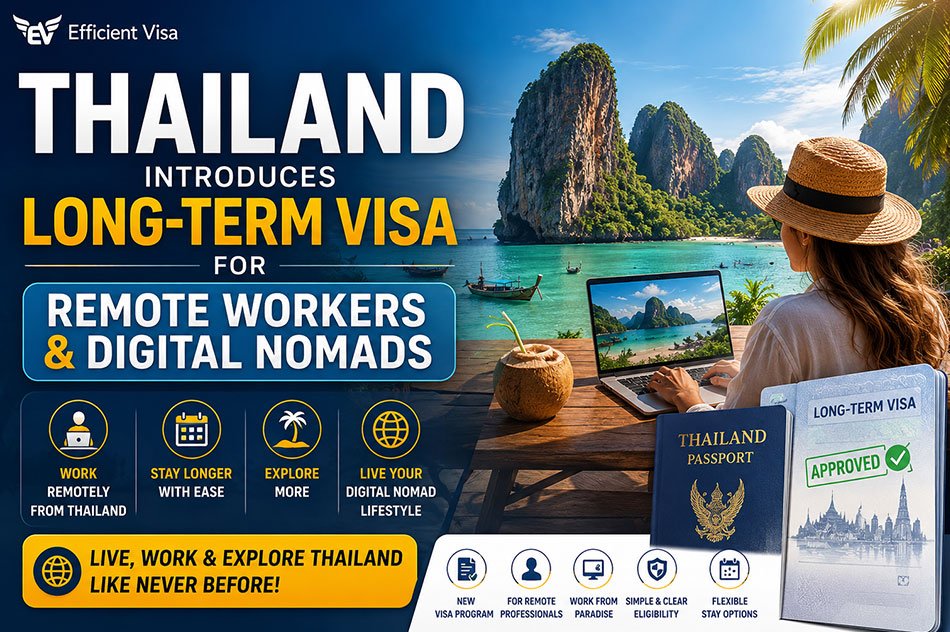
Thailand launched a 5 year multiple entry visa option for modern travellers like the digital nomads, remote workers and freelancers.
Thailand has introduced a five year multiple entry visa, officially known as the Destination Thailand Visa which is aimed at the digital nomads, freelancers and wellness tourists. The DTV allows the cultural learners who want to learn soft power activities like Muay Thai classes or Thai cooking courses to live in Thailand without full time Thai jobs. This visa allows the remote workers and freelancers to live and work in Thailand for five years.
The country is a long time favourite of the travellers for long holidays, backpacking adventures, remote work escapes and wellness retreats. Its tropical islands such as Phuket, vibrant cities like Bangkok and cheap living costs have made it an ideal destination for seasonal escapes.
After the outbreak of pandemic, Thailand became a top spot for the digital nomads and remote workers with fast internet, co-working spaces and wellness retreats like yoga classes. Thailand, with its new scheme, wants to position itself as a remote work and lifestyle hub. The DTV will likely boost tourism in Thailand while encouraging long term stays from high spending visitors that are engaged in remote works.
Each entry allows stay of 180 days which can be extended further up to 360 days, with the option of unlimited re-entries during the validity period. This visa option is clearly a game changer for the modern travellers. The applicants can also sponsor their dependents like a legal spouse and children under the age of 20.
The applicant must be at least 20 years old and should provide the financial proof of at least 500,000 Thai baht in order to be eligible for the DTV visa. The applicants should also provide the employment contract and supporting documents from the overseas company.
The DTV visa is designed only for those working remotely for other foreign companies. If you plan to work for Thai company or visit the country to meet the Thai clients, you will need a separate work visa.
Who Can Apply For DTV?
The visa will allow these travellers to stay in Thailand for up to 5 years-
- Digital nomads
- Freelancers
- Entrepreneurs
- People learning ‘soft power’ skills or other training programs
- Wellness and medical tourists
- Travellers wanting to participate in Thai cultural activities
Show Your Funds
Thailand’s DTV requires a financial proof of at least 5,00,000 Thai Baht in accessible cash or equivalent to make sure that the visitor can support themself during the long stays.
These documents can be accepted as financial proof:
- Bank statements
- Salary Slips
- Employment Contracts
- Savings certificates
Other financial assets like cryptocurrency, stock portfolios, or credit limits will not be accepted as proof of funds.
Document Requirements
The applicants need to show these documents while applying for the DTV:
- A valid passport with at least 6 months validity
- Bank statements of last 3-6 months or salary proof
- Passport size photographs
- Proof of stay in Thailand
- Health insurance
- Documents related to activity or programme in Thailand
Those applicants looking for Muay Thai camp, cooking courses or wellness program may also need enrollment certificate or invitation letter.
After You Arrive
Once you land in Thailand on a DTV visa, you must follow the local immigration rules for smooth long term stays. File a TM30 address report soon after your arrival, usually hotels handle it, but for rentals or apartments, the owner or manager has to file it with the immigration within 24 hours.
For longer stays beyond the initial 180 days, apply for the extension at the immigration office for nearly 1,900 Thai Baht.
Final Note
The DTV has been introduced to make travel easy for the long term travellers like the freelancers, digital nomads and the remote workers. It makes it quite convenient for the tourists looking for long haul vacations to stay in Thailand without having to rely on repeated tourist visa visits.
